How to find your Nakshatra from your date of birth
What a nakshatra actually is
In Vedic astrology (Jyotish) the 360° circle of the zodiac is divided in two ways at once: into 12 rashis (signs) of 30° each, and into 27 nakshatras (lunar mansions) of 13°20′ each. The nakshatras are older than the signs in Indian tradition, and each is named after a real star or star group that sits in that part of the sky, such as Rohini (Aldebaran) or Chitra (Spica).
Your janma nakshatra (जन्म नक्षत्र), or birth star, is simply the nakshatra the Moon was passing through at the moment you were born. It is not the Sun's position and not your Lagna. In everyday Indian life it is the single most-used fact from a kundli: it shapes the traditional first syllable of a name, the Vimshottari dasha timeline, and Kundli Milan.
Why it is the Moon, not the Sun
Jyotish treats the Moon as the mind and the most personal, fast-changing influence in a chart. Because the Moon moves about 13° every day, it spends roughly one day in each nakshatra and goes around all 27 in about 27.3 days. That speed is exactly why the nakshatra is so personal: two people born a day apart usually have different birth stars, while their Sun signs are often the same.
What you need
| Detail | Why it is needed |
|---|---|
| Date of birth | Fixes the Moon's position to within about one day. |
| Place of birth | Sets the correct time zone, including historical ones (India used several time standards before 1955). |
| Time of birth | Needed only if the Moon changed nakshatra on your birth day, and always needed for the Lagna. |
Step by step
- Open the free Rashi & Nakshatra finder.
- Enter the date of birth, ideally from a birth certificate or hospital record.
- Enter the time if you know it, and type the town or village of birth.
- Tap Find my nakshatra. You will see your nakshatra, its pada (quarter), its ruling planet and deity, and your Rashi.
When the birth time really matters
On most days the Moon stays in one nakshatra for the whole day, so the date alone is enough. But about once a day the Moon crosses from one nakshatra to the next. If that crossing happened on your birth day, people born in the morning and evening of the same date can have different birth stars. A careful calculator should never quietly guess. Satya Astro shows both possibilities when the time is unknown, so you can check with family records.
What the pada adds
Each nakshatra has four padas of 3°20′. The pada links each nakshatra quarter to a navamsha sign and to a traditional syllable (namakshar), which is why families sometimes ask for the pada when choosing a name.
Why different apps sometimes disagree
Most Indian panchangs use the Lahiri (Chitrapaksha) ayanamsa, the government-adopted standard, and so does Satya Astro. A calculator using a different ayanamsa, the Western (tropical) zodiac, or the wrong historical time zone can shift the Moon enough to change the nakshatra near a boundary. If two results disagree, check that both use Lahiri and the correct place of birth.

Find your Rashi and Nakshatra, free
Enter your birth details and get your Moon sign, birth star and pada in seconds, calculated in your browser.
Common questions
Is janma nakshatra the same as birth star?
Yes. Janma nakshatra, birth star and birth nakshatra all mean the nakshatra the Moon occupied at the moment of birth.
Can I find my nakshatra without a birth time?
Usually, yes. The Moon spends about a day in each nakshatra, so the date and place are often enough. If it changed nakshatra on your birth day, you need the time to decide, and a good calculator shows both options.
How many nakshatras are there?
There are 27 nakshatras of 13°20′ each. Some traditions also use a 28th, Abhijit, for specific timing purposes, but birth charts use 27.
Keep reading
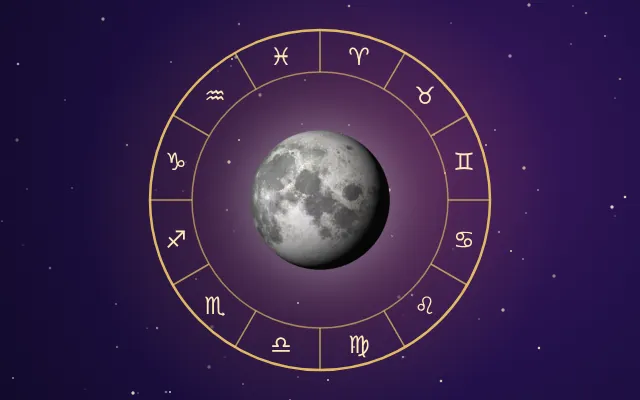 Basics · 5 min
Rashi, Lagna and Nakshatra: what is the difference?
Three terms people mix up all the time. A plain-language guide to Rashi (Moon sign), Lagna (ascendant) and Nakshatra (birth star), and what each one is used for.
Read →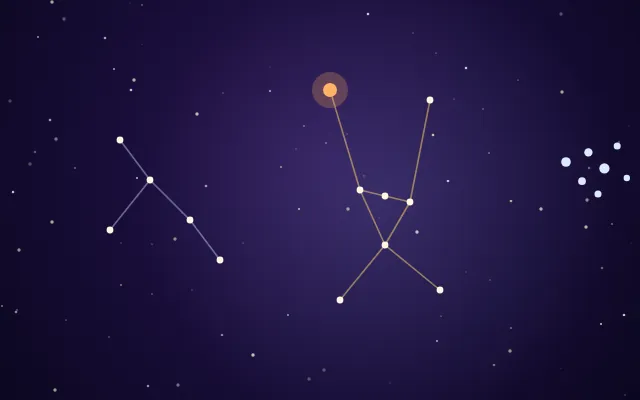 Sky · 6 min
The 27 Nakshatras are real stars
Rohini is Aldebaran, Chitra is Spica, Swati is Arcturus. A table of all 27 nakshatras with the stars they are named after, and how to find yours tonight.
Read → Timing · 7 min
Vimshottari dasha explained simply
How the 120-year Vimshottari dasha works, the length of each planet's period, how your birth nakshatra decides where it starts, and how to read Mahadasha and Antardasha.
Read →